
Developer’s diary
How Air is being built.
Entry by entry.
What we finished, what we changed and why. New entries appear here as the work moves.
- 74
- app builds on TestFlight since 26 September; the latest is build 98
- 496
- changes to the app since 11 September
- 12
- tagged firmware builds, six released to owners
- 156
- changes to the firmware since 18 September
- 33
- named revisions of the case in six weeks
- 17
- test prints of the case
- 20
- numbered versions of the tray, four real shapes
Next
- The board arrives at the assembler
- First assembled samples, with the screen
- Test cases cast at the factory
- Certification contract signed
November 2026
-
17NovApp and films
All our Air films in one place
Every film we have made about Keyring Air so far, in one row: the stories, the app, the box and the board. Each one plays with its sound.
Agents meet first Press. Talk. Done. Not great at hello Odd hobby Ocean run Surf buddy At the expo Reasons first Keyring Air, out of the box Every screen, one face Raily Device, the demo Someone found you nearby Your device at a glance Where you pressed What your device shows Ask your agent One press. A calm screen. The Air box, one turn -
15NovApp and films
Setup steps with icons
The device cards in the app now show short steps, each with its own icon, instead of long paragraphs. Arrives with the next TestFlight build.
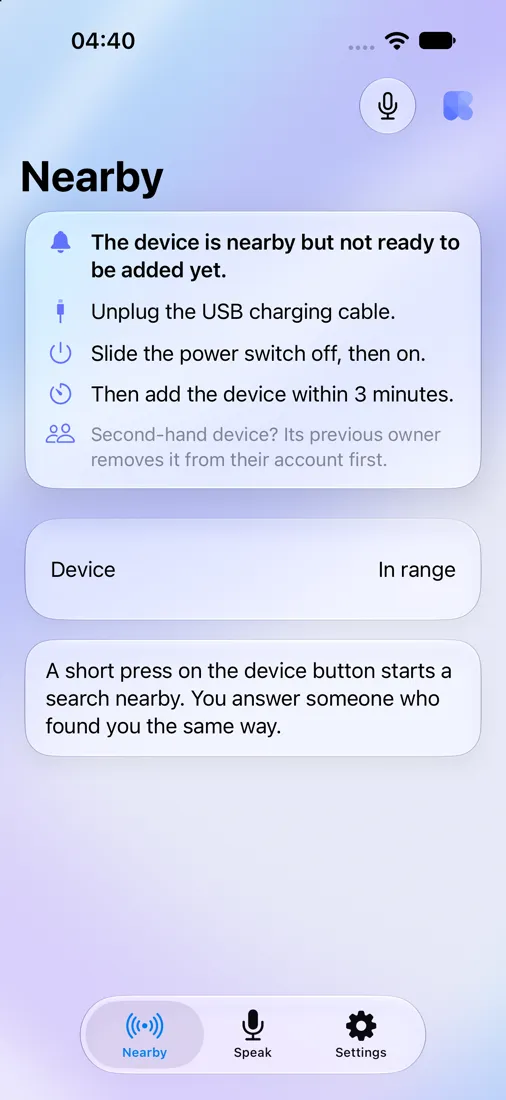
Adding a device 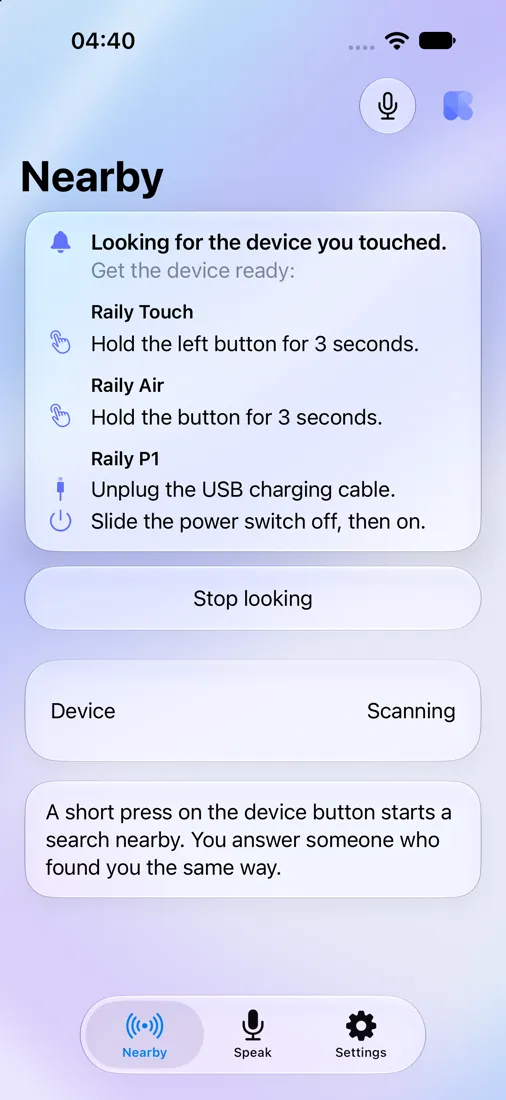
After a tag tap 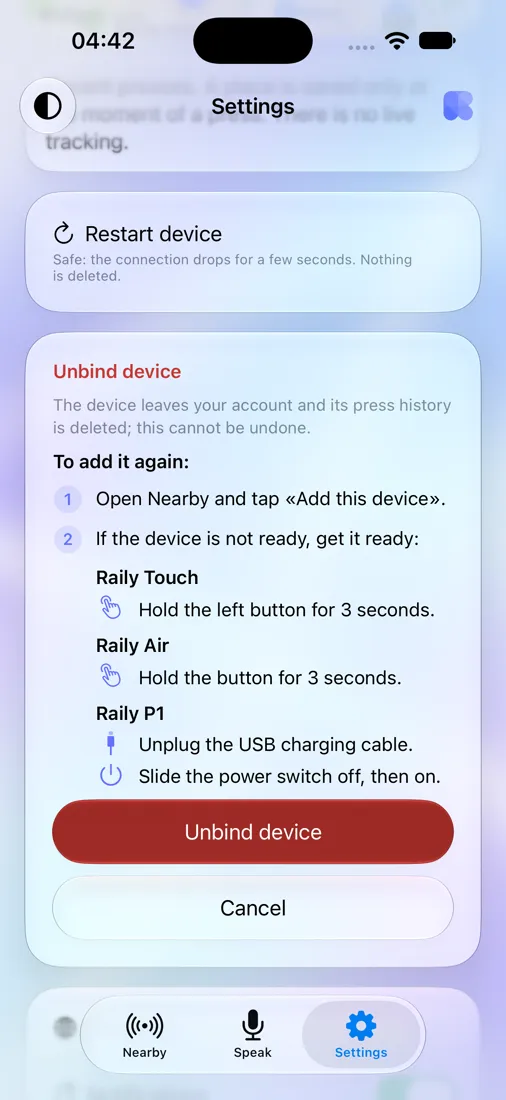
Unbinding -
15NovBox
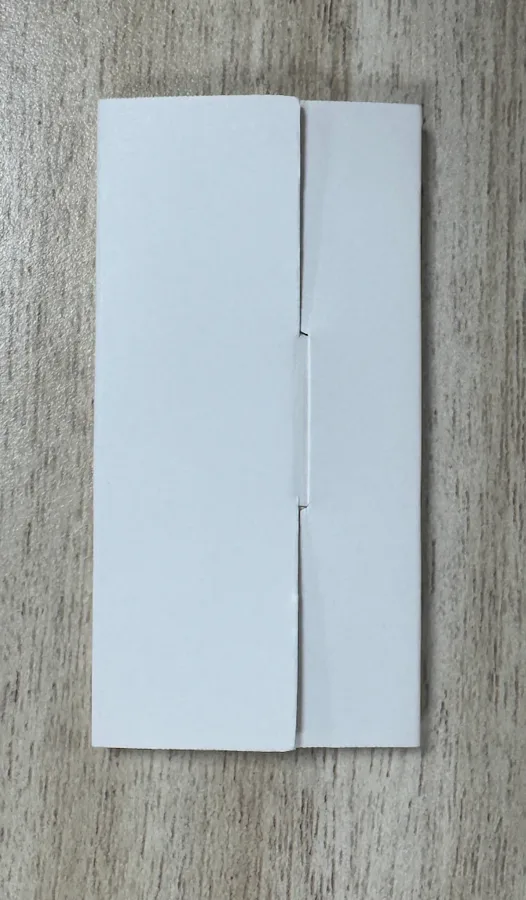
Still choosing the envelope shape
We are still choosing the shape of the card envelope and trying samples from different factories. The latest one wraps the cards in four flaps: here it is open and closed, and in the film it is packed and opened by hand.
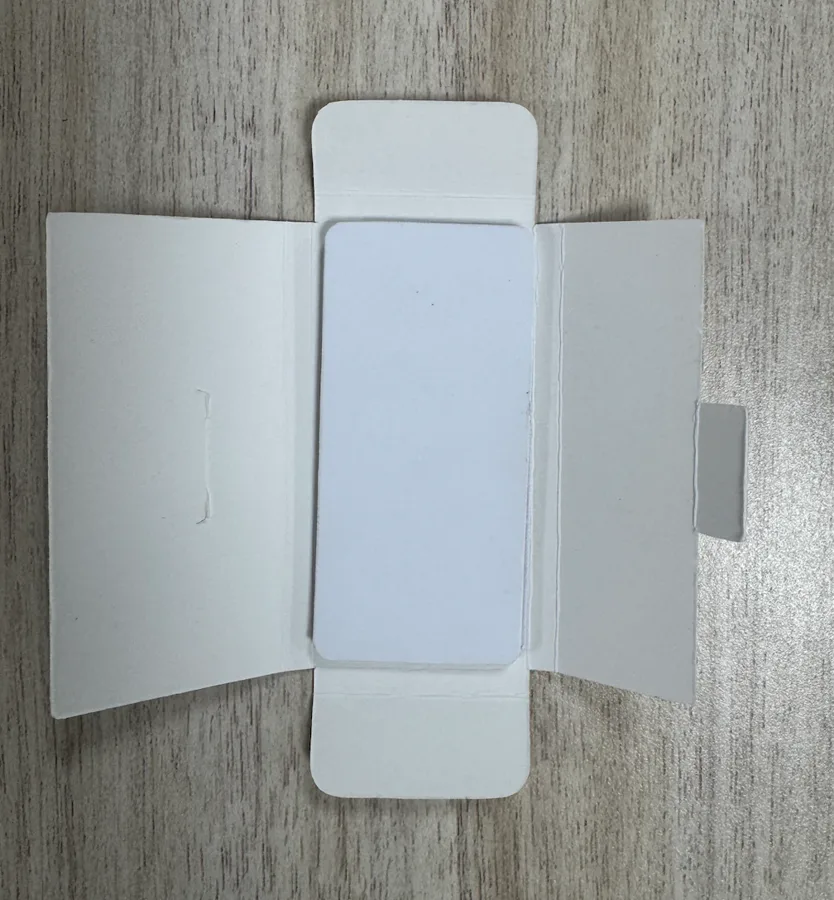
Packing and opening the sample -
14NovApp and films
A living background in the app
Soft veils now drift behind the cards on every screen of the iPhone app, in light and dark. While you talk to your agent, a band of light runs around the edge of the screen. The background stands still with Reduce Motion or Low Power Mode on. Out to testers on TestFlight.
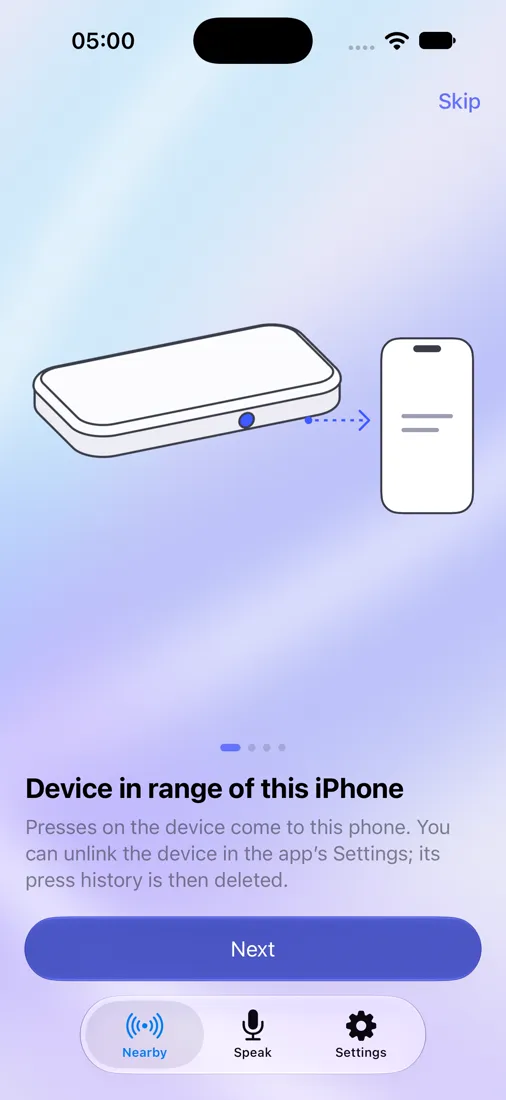
Light 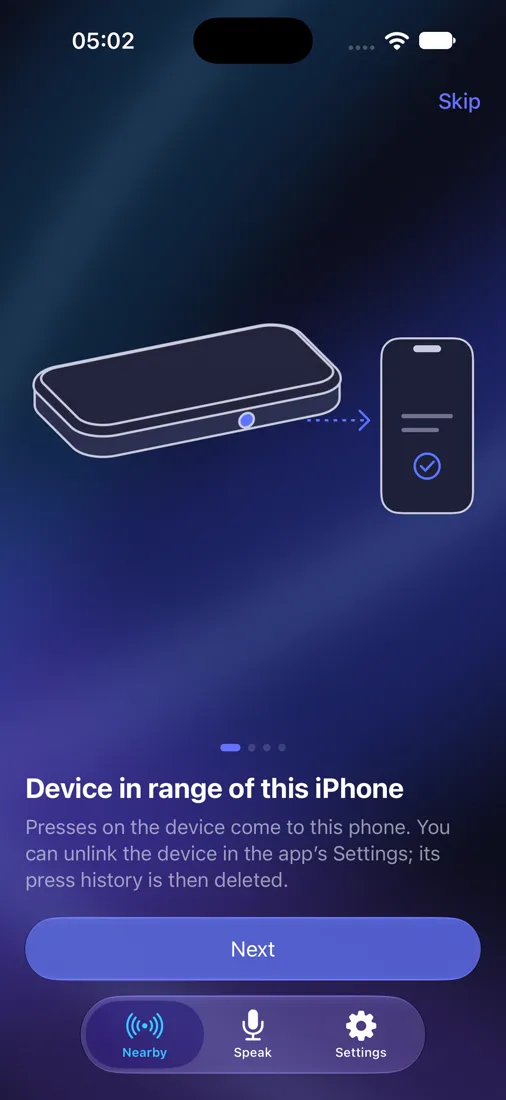
Dark Talking to your agent Talking to your agent, dark Nearby Nearby, dark -
13NovBox
The card envelope, folded at the factory
The packaging factory sent two films: the envelope that holds the instructions and the cards, folded and filled by hand. We tried two versions; the film marked «Chosen» shows the one we kept.
The other version Chosen -
12NovPapers
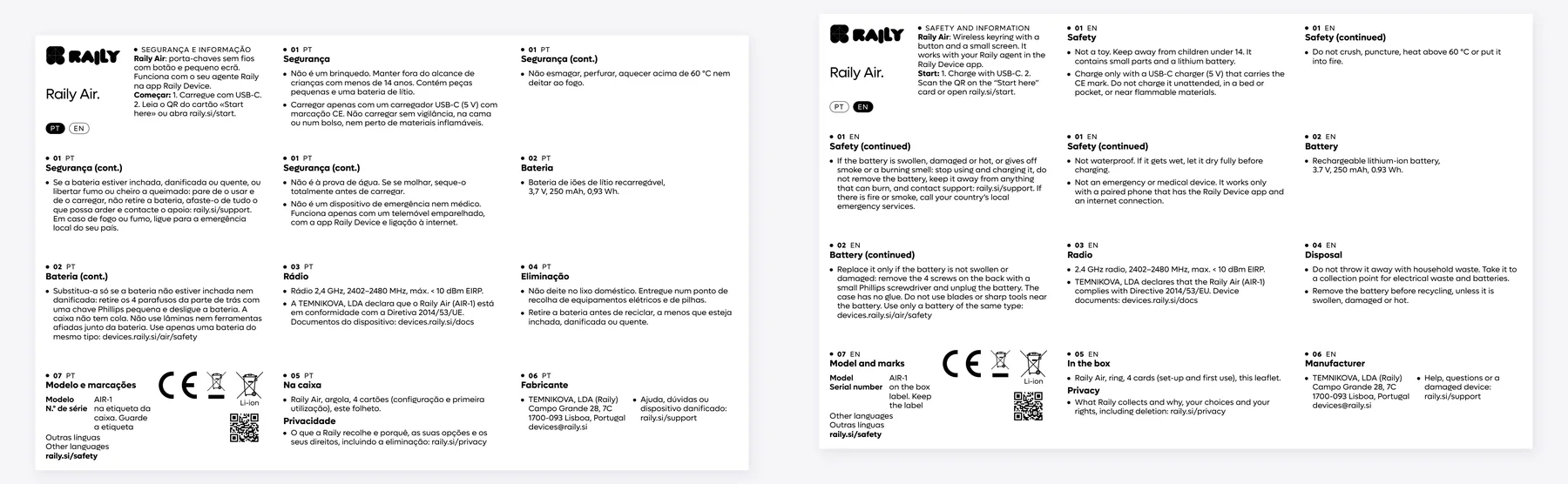
Safety leaflet trimmed
The safety leaflet is printed on both sides and folds down to the size of the card envelope. Here it is unfolded: Portuguese on one side, English on the other.
-
12NovPapers
The lab agreement is under review
The test lab sent its service agreement and statement of work. We asked for fixes and passed the text to our lawyers.
-
12NovCase
No radio window in the aluminium back yet
We will not cut a window for the radio into the aluminium back for now. The lab first measures the signal on a real sample; only a large loss would bring an insert.
-
11NovApp and films
App build 97 on TestFlight
Build 97 of the iPhone app went to testers: the seventy-third build on TestFlight since 26 September. It checks which Raily model it is talking to before it updates the firmware.
-
11NovCase
Two cases: all plastic, or aluminium below
Air comes in two cases: all plastic in Raily Blue, or a plastic top and button over a clear-anodised aluminium bottom. The aluminium lid is gone: metal over the antenna gets in the way of the radio signal and makes certification harder.
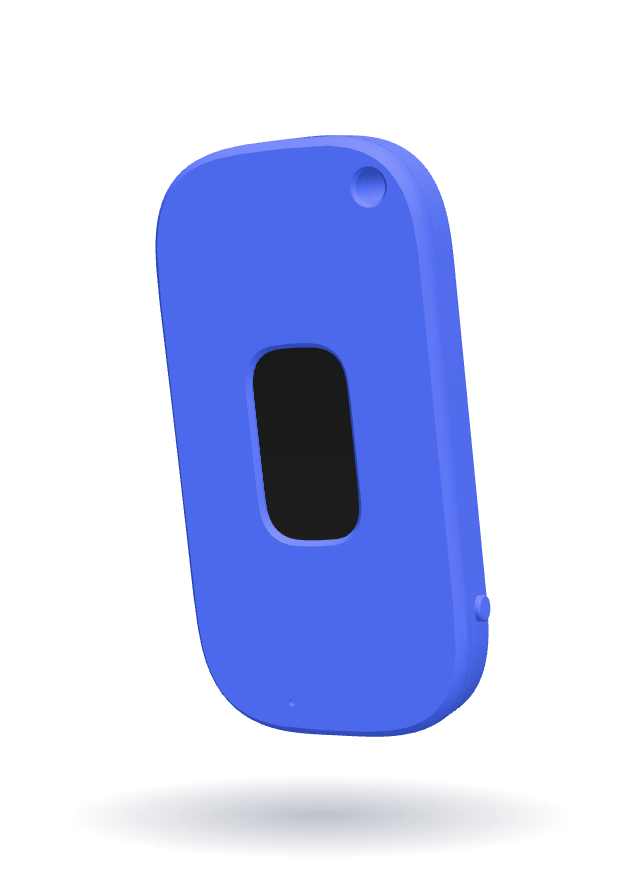
Before 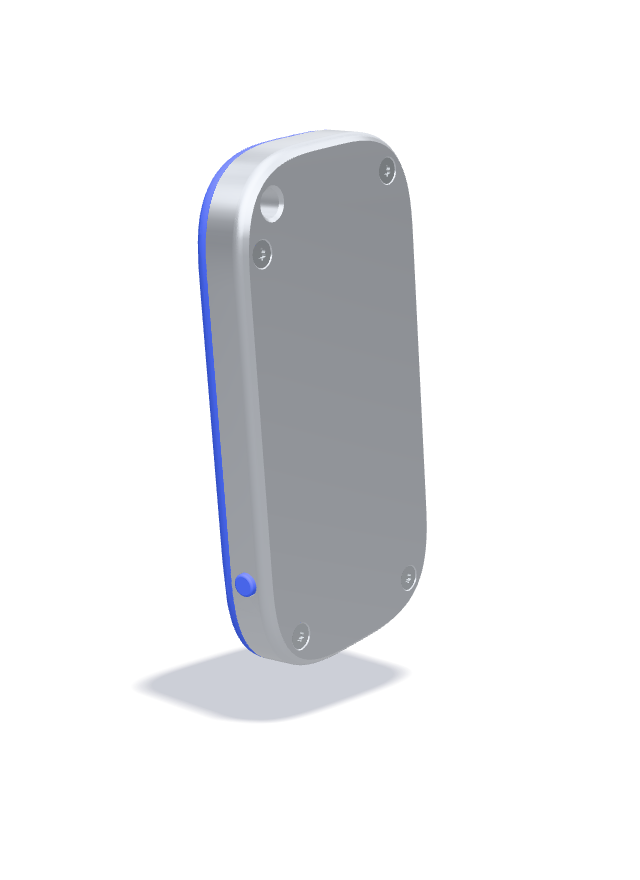
After -
11NovCase
Four small screws close the case
The case closes with four small Torx screws from the back, so it can be opened for service. The same model now turns under your finger on the site.
-
11NovApp and films
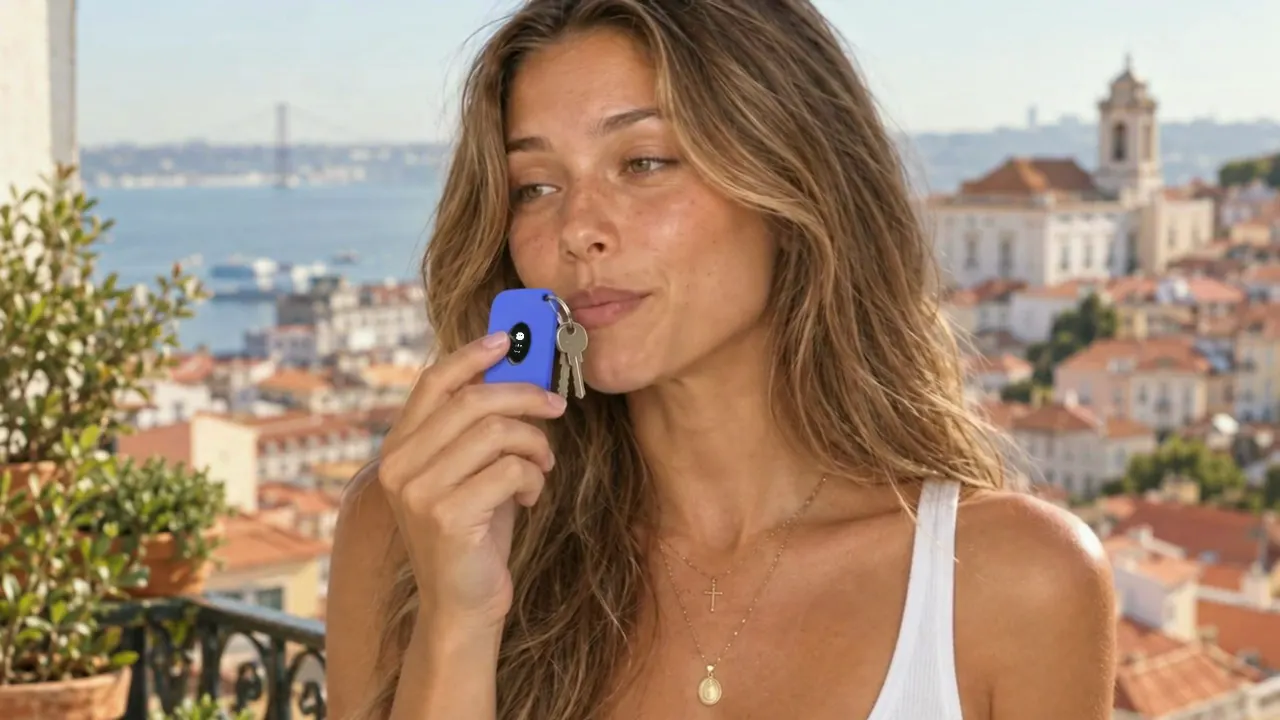
Eight short stories filmed
One press, eight everyday situations: a new city, an expo, a morning run. Each film is under half a minute.
-
11NovBoard
The first ten boards of revision C
The assembler's quote for the first ten revision C boards is confirmed. This is the first assembly order for our own board.
-
11NovCase
A radio lab weighs the aluminium options
A radio test lab reviewed the options: a metal front over the antenna is a high risk for certification, a metal back with a plastic front is much easier. The aluminium front was dropped. The aluminium back is offered in natural silver; factories also quote a blue anodised one for later.
-
11NovBox
Box makers offer mock-ups
Packaging factories offer white mock-ups and demo videos of the box. Quotes from about ten of them are in review.
-
11NovBox
A fifth card, drawn and left out
A fifth card, «How to wear», was drawn. We kept four cards.
-
10NovFirmware
A firmware line for each model
The update server now keeps a separate firmware line for each Raily model. The same day firmware 0.4.5 adds stability fixes: a watchdog that restarts a frozen keyring after 16 seconds, and a safer stop of the voice stream.
-
10NovFirmware
Raily Touch: a prototype on a real board
Prototype only. Raily Touch, a keyring with a touchscreen, shows its approved screens on a real board in a demo build made for an event.
-
10NovBoard
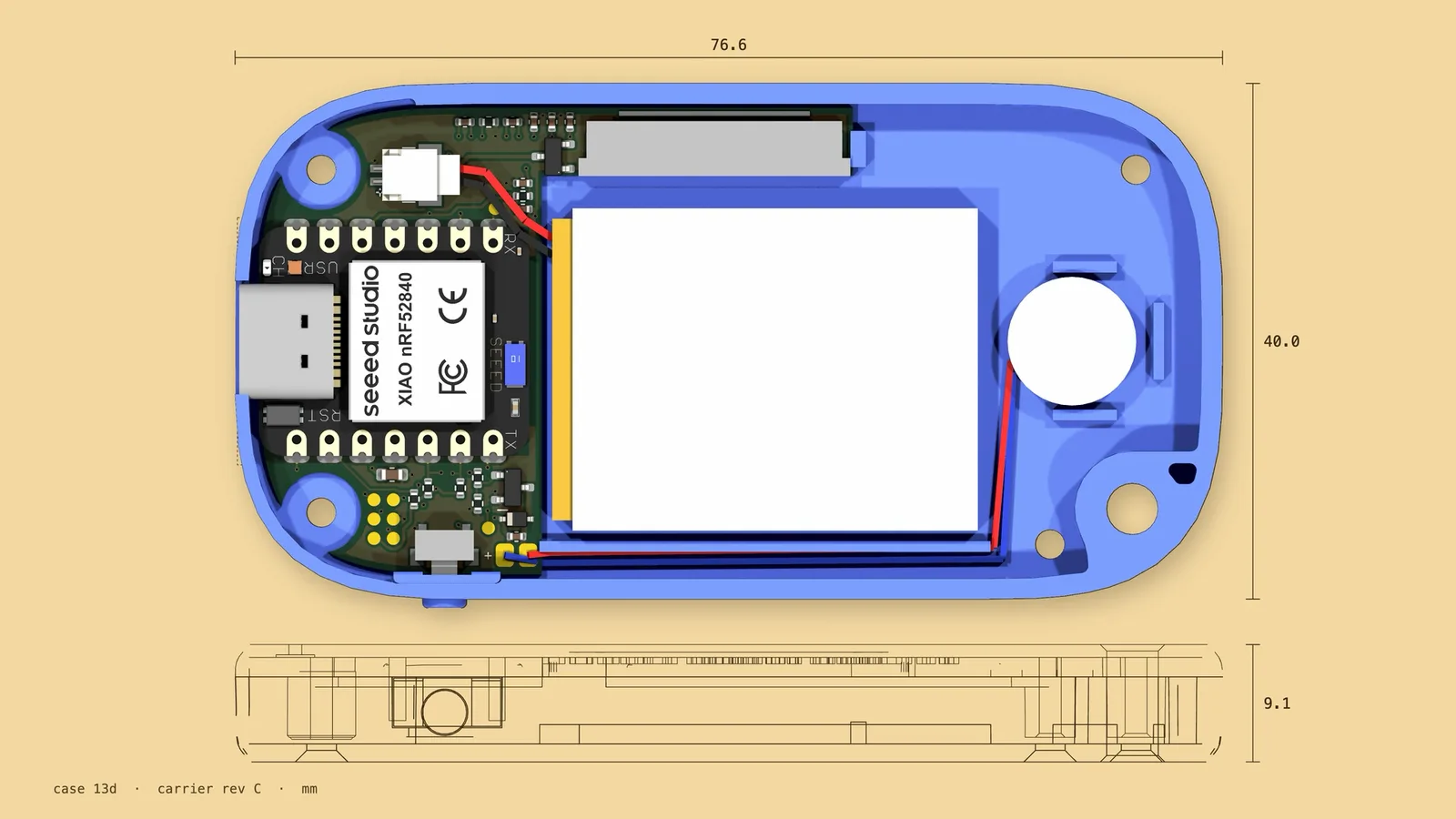
Our own board, on film and in 3D
A one-minute film shows the board going into its case. On the site you can also open the case in 3D, see through it and take it apart.
-
10NovBoard
Board moves from revision B to revision C
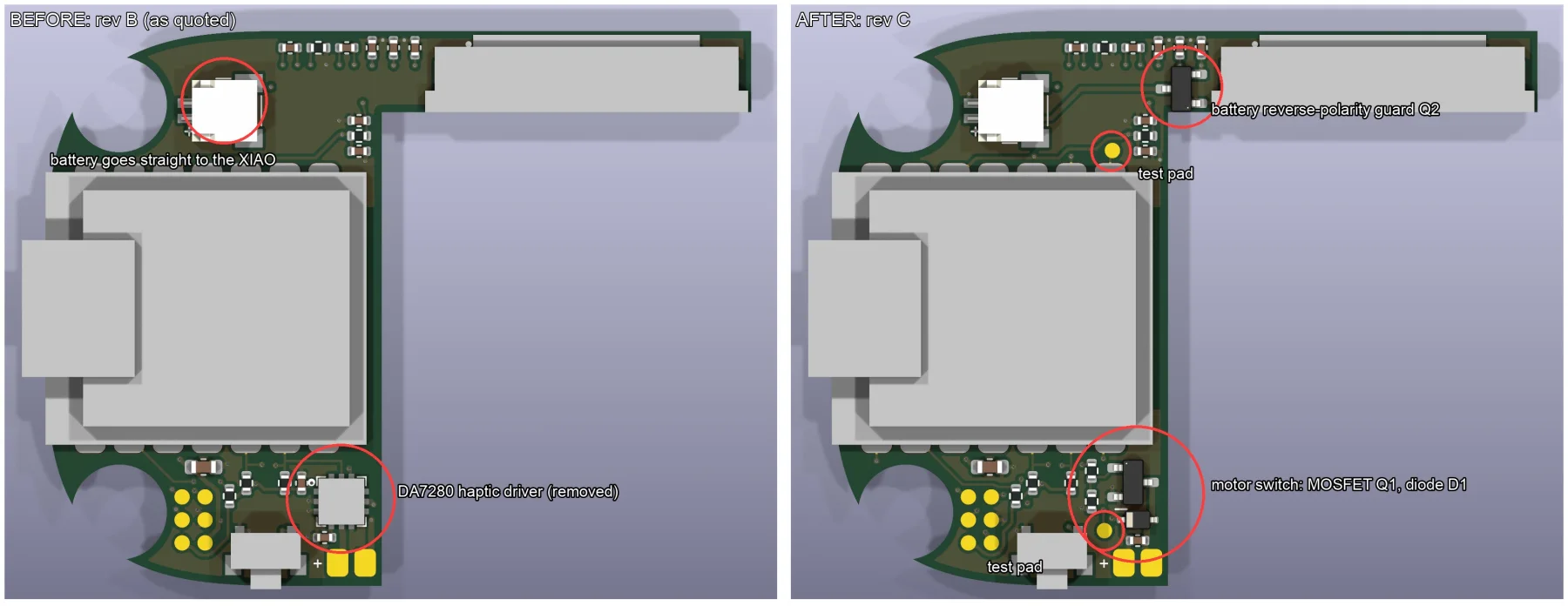
Revision C protects the board if the battery is plugged in the wrong way round, adds test points for debugging and drives the vibration motor with a simpler circuit. The outline and the case stay the same.
-
10NovBox
A cord with a split ring
Decided: a short cord with a split ring replaces the bare metal ring, so Air clips to a bag or to jeans. The cord itself is still being chosen.
-
10NovPapers
Air gets its own FCC ID
For the United States Air will be certified under its own FCC ID rather than rely on the radio module's existing grant: a device carried in a pocket counts as portable.
-
10NovBox
A shorter, taller box: tried and set aside
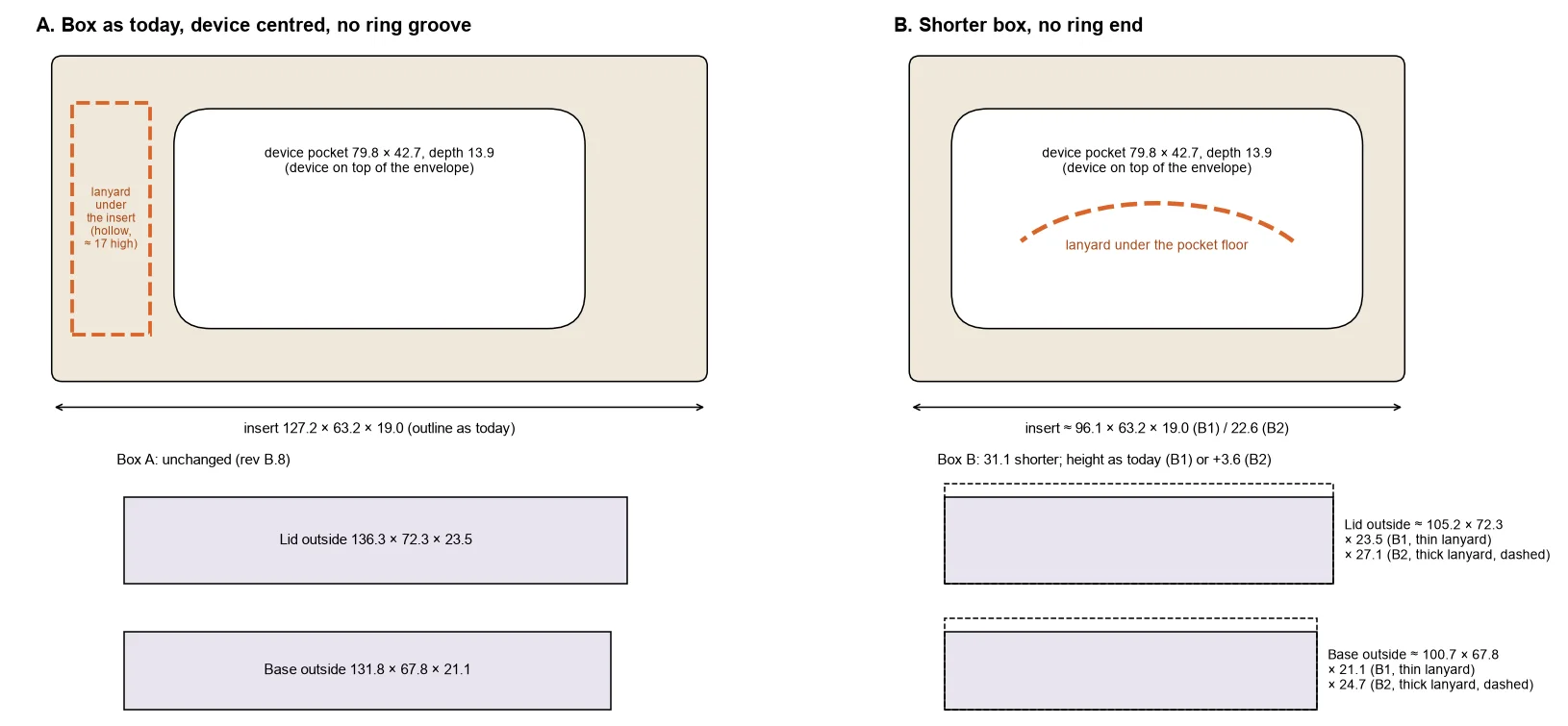
With a cord instead of the ring, the box could be 31 mm shorter and up to 3.6 mm taller, with the cord packed under the tray. We sketched it to compare prices, and kept the box as it is today.
-
8NovBox
The first sample box from a factory
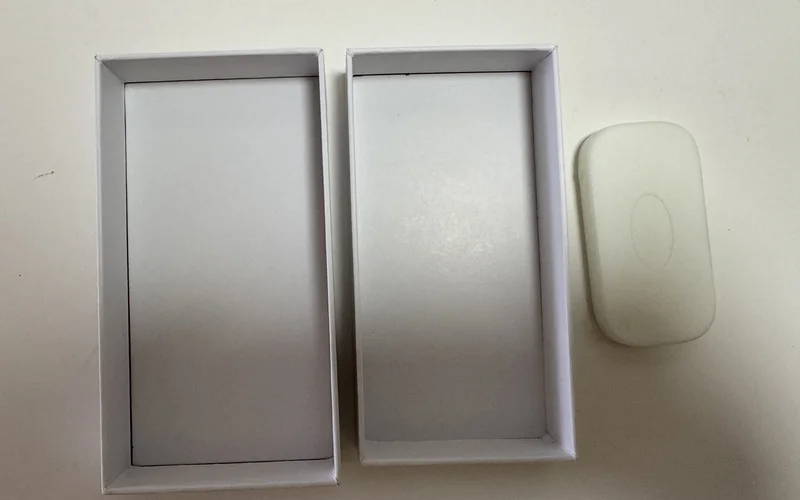
The first white sample from a box maker showed a dark line where the wall meets the floor. The floor and lid liners were redrawn so that no grey board can show.
Earlier design -
8NovBox
The little tab on the envelope
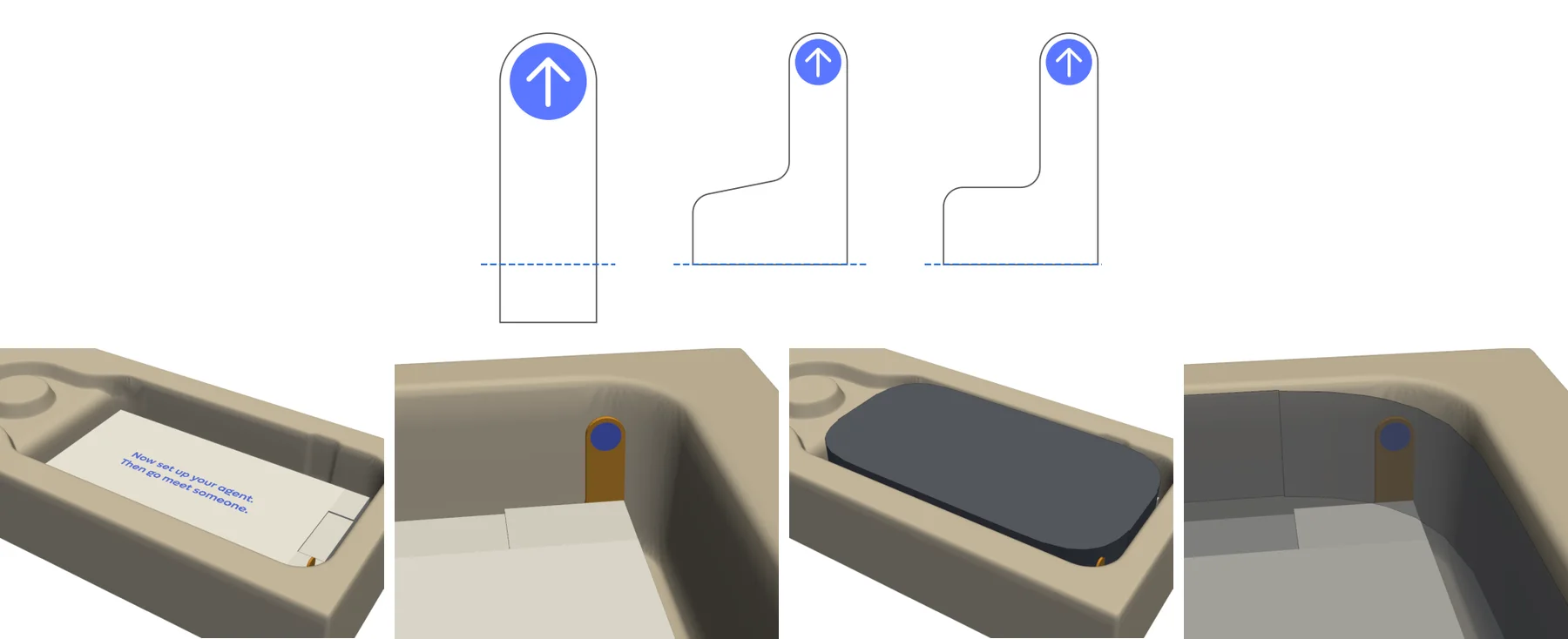
We spent a long time on the tab that lifts the card envelope out. It has to stand in the corner of the tray and not bend when Air lies on top of it. Several shapes were drawn: a slanted root, a tab in the middle that ran into Air, a separate glued strip. The one that stayed has a flat step and a round tip with a blue dot, the same as the seal of the box. Top row: the seal tab, the slanted version and the final one. Bottom row: the tab in the tray, with the envelope alone and with Air in place.
-
7NovCase
One case shape for plastic and aluminium
Both versions share one shape, so each sits on the board and the button the same way. On the left, the first case of 1 October; on the right, the case as it is now.
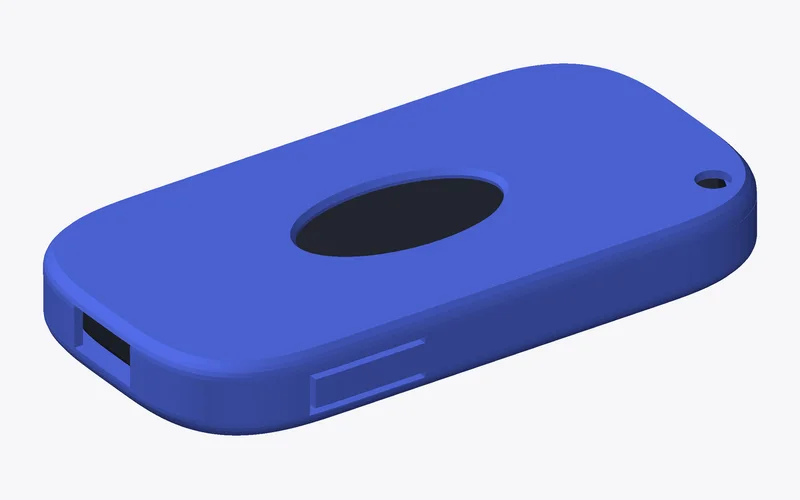
Before 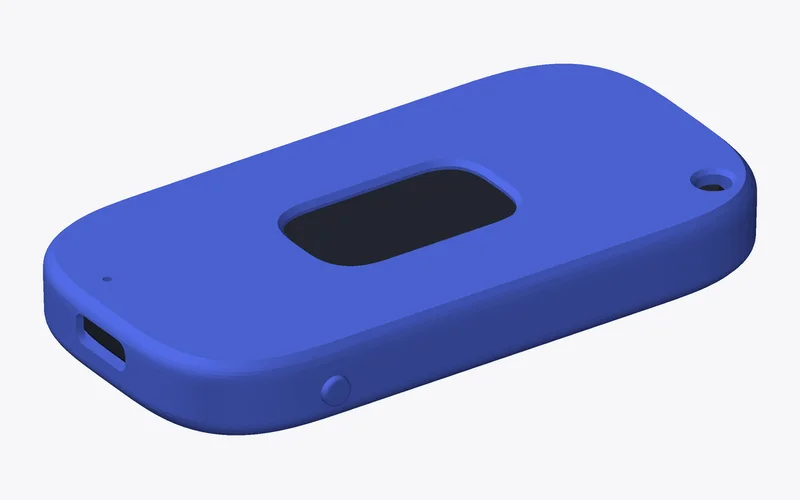
After -
7NovBox
A new envelope for the cards
The square envelope became a narrow rectangular one that sits under the device. It has a small pull tab of our own design to lift the cards out.
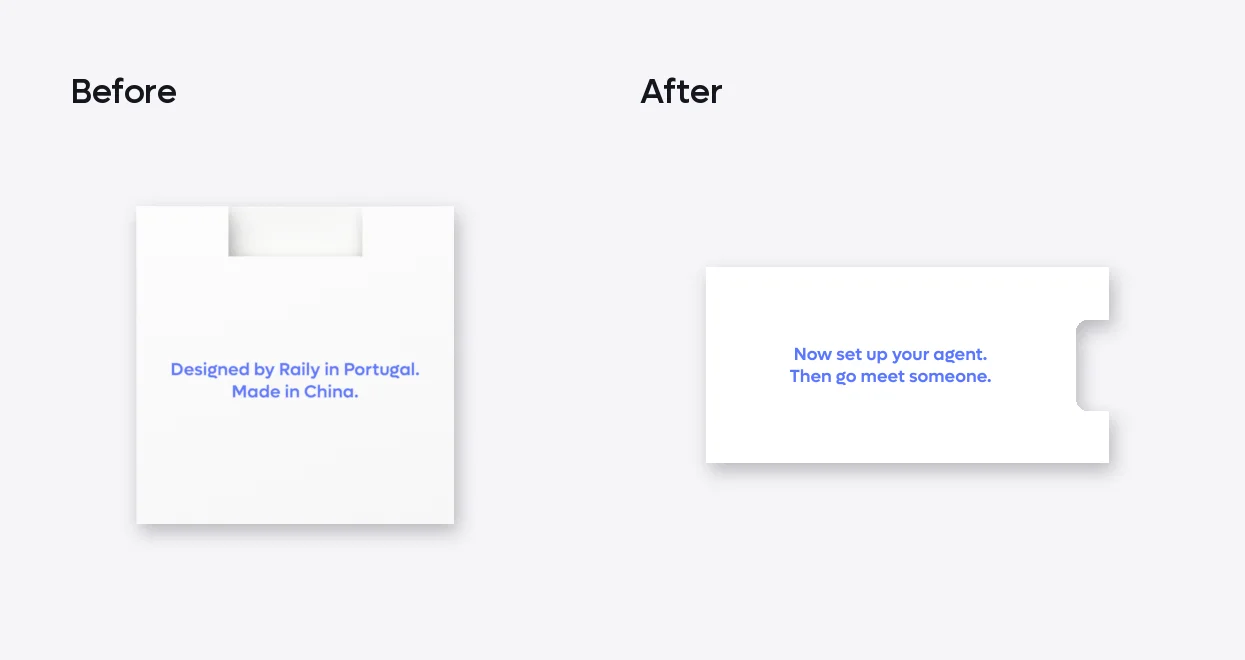
-
6NovCase
The whole case approved from a print
Tray, face and button were printed together and approved as one master model. Every later change starts from it.
-
6NovPapers
A test lab is chosen
After a firm quote and a signed confidentiality agreement we chose one lab for FCC and CE testing: the plastic version first, the aluminium back as an add-on.
-
6NovCase
The case files go to nine makers
The approved case, version 13, is sent to nine case makers for new quotes: injection moulding for plastic, machining for aluminium.
-
5NovCase
An opening shaped like the plug
The opening for the USB-C port changed from a plain rectangular cut-out to a window in the shape of the plug. Its size was chosen after five trial prints, so the cable goes in snugly with no gap.
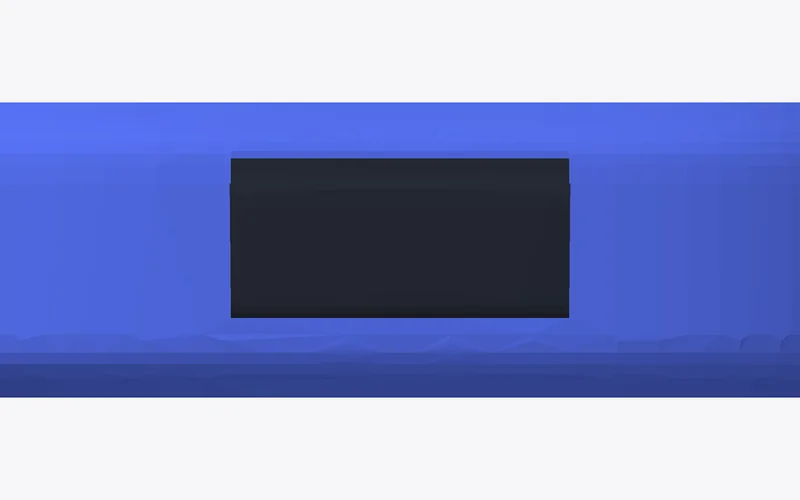
Before 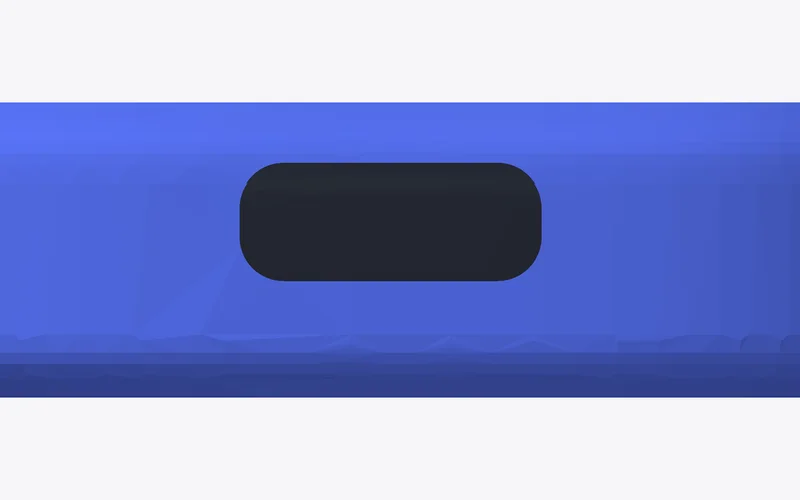
After -
5NovBox
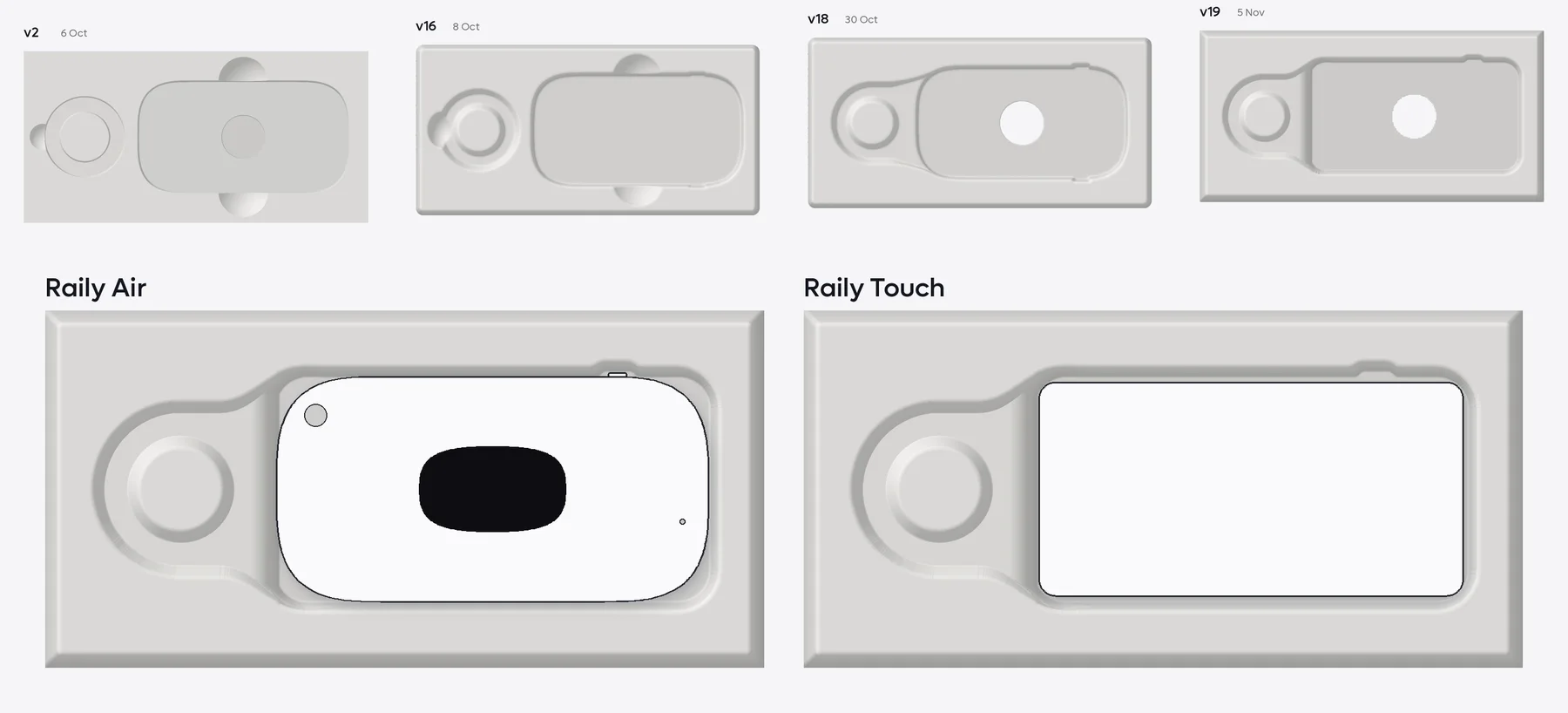
One insert for Air and Touch
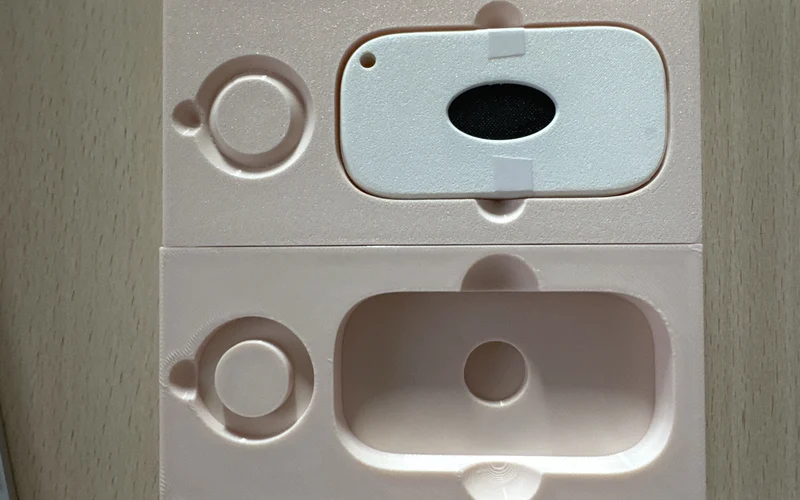
The tray inside the box has twenty numbered versions in a month, and four real shapes. The four are below: 6 October, 8 October, 30 October and 5 November. The latest has one pocket shape that holds either Raily Air or Raily Touch.
-
5NovBox
The box grows by 0.2 mm
To hold Air and a thicker device in one box, we studied a box 3 mm taller, then 1.5 mm taller. The final answer: 0.2 mm more height and the same footprint. Air sits flush under the lid.
-
4NovCompany
Patent application filed
Patent pending: U.S. provisional application No. 64/191,125 covers the Raily agent and its link with wearable devices.
-
3NovFirmware
Firmware 0.4.4: the screen follows your voice
While you hold the button and talk, the keyring screen shows Speak, then Thinking, then Answer on phone. For keyrings with a screen.
-
3NovCase
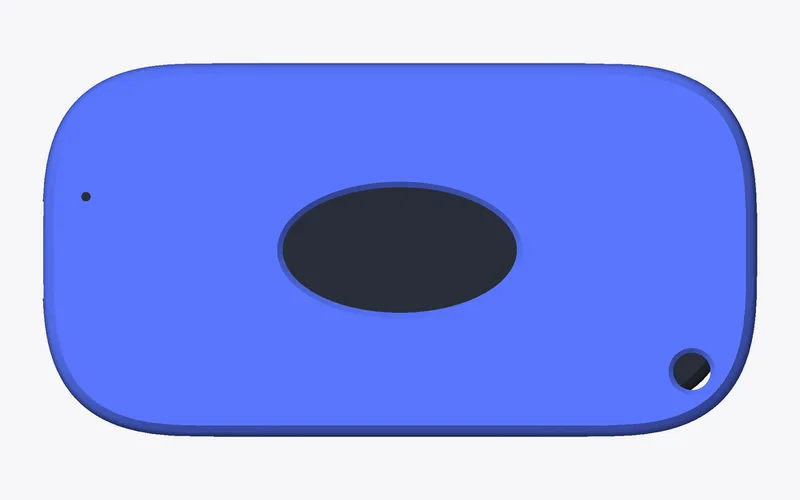
The window now shows the whole screen
The window over the screen changed from an oval to a rounded rectangle. The oval cut off the corners of the display; the new window shows all of it. The screen itself is the same.
Before 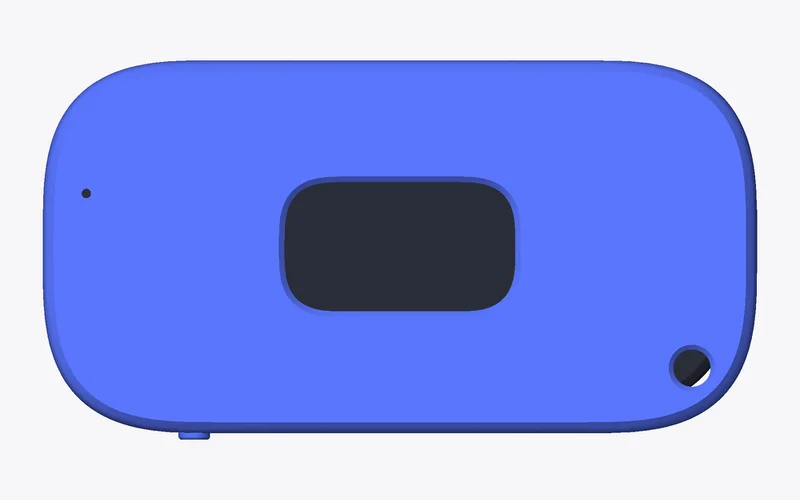
After -
3NovBox
The drawing on the lid gets the new window
The keyring drawn on the box lid now has the rounded screen window, the same as the case.
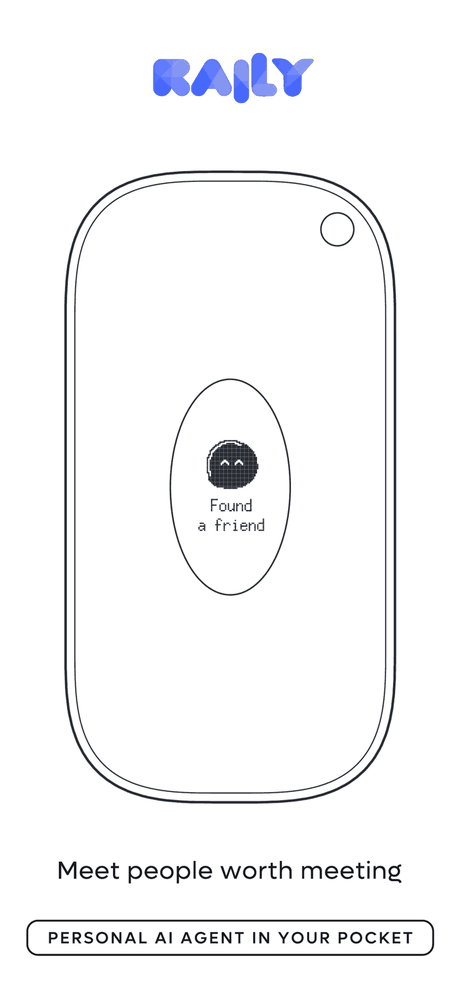
Before 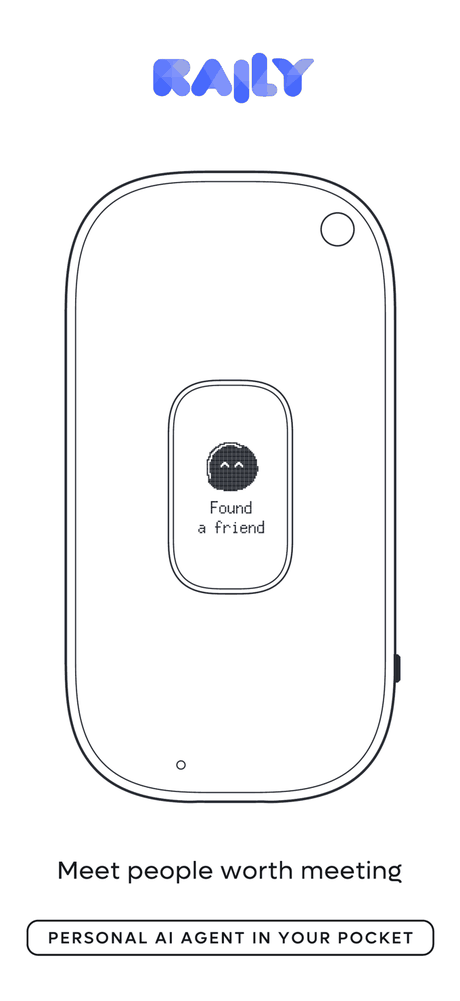
After -
3NovBox
One printed box for every model and market
The model, the address and the marks move to a small label, so the print on the box itself stays the same everywhere.
-
3NovCase
A fully aluminium case, drawn and questioned
We drew a case with an aluminium front, back and button, and modelled where the antenna sits. On paper a closed metal shell would block the radio, so metal had to be tested, not assumed. This all-metal version was later dropped.
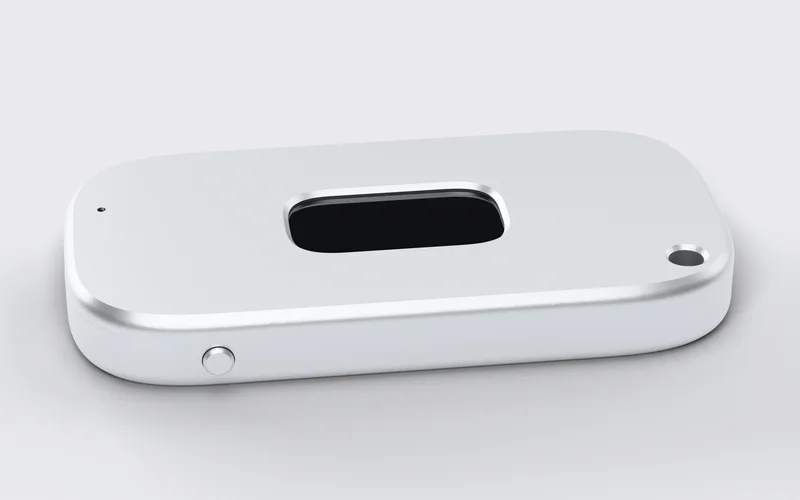
-
3NovCase
Tapered walls and a fine matte finish
Moulds need slightly tapered walls. We added 1.5° to the outer walls and chose a fine matte texture: a change you can barely see.
-
3NovPapers
No marks on the body
Like current phones, Air carries no certification marks on its body. They go on the box label and the leaflet, with an electronic label in the app or on the screen.
-
3NovBox
A 1:1 model of Air for a box factory
A solid full-size model of the Air body is ordered for a box factory, so it can try the tray and the box against the real size.
-
3NovBox
Cards and leaflet resized for the narrow envelope
The four cards became 70 × 33 mm rectangles on matte 300 g paper. The safety leaflet became one sheet of twelve panels, folded like an accordion, three by four.
-
1NovPapers
Three labs asked for certification quotes
Requests for quotes go to three test labs: FCC for the United States, CE RED for the European Union.
October 2026
-
31OctBox
A fold-by-fold assembly check
We went through the box fold by fold. Out came straight corner steps and turn-ins that reach the floor, so the corners close cleanly.
-
30OctBox
The box gets a drawn lid
The first box, on 7 October, was plain white with the name on top. Three weeks later the lid carries a line drawing of the keyring, and the box is modelled part by part: lid, tray, envelope with cards, base. The drawing still has the oval window, replaced on 3 November.
Before 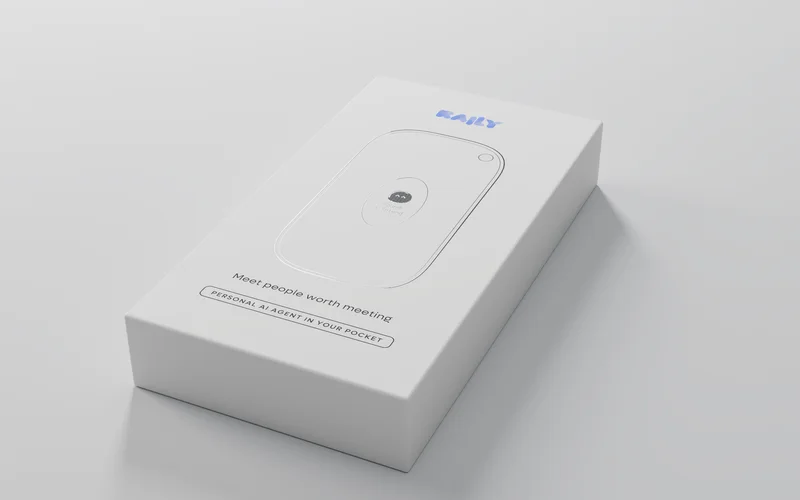
After -
30OctCase
Button height chosen by touch
We printed buttons standing from 0.4 to 0.8 mm proud of the case and chose 0.70 mm: easy to find by touch, still safe inside the gift box.
-
30OctBox
One accordion sheet, or four cards
We priced one folded accordion sheet instead of four cards and a leaflet. The cost was the same, so the four cards stayed. The same day two lid finishes were set: gloss on the keyring lines, or an embossed name.
-
29OctCase
First trial print of the compact case
Tray, face and button printed for the first time, and the button went into its place.
-
28OctCase
Moulder feedback, round two
Inner corners rounded, small reliefs at the corners of the glass, the wall over the status light made thicker.
-
27OctCase
Moulder feedback, round one
The button lost its snap arm, which needed a costly sliding core in the mould, and every narrow gap inside was filled in. The mould became simpler and stronger. The same day the first aluminium part was drawn: a machined front with threaded holes.
-
27OctBox
The tray moves to moulded paper pulp
A resin print of the tray looked cheap. The tray moved to moulded paper pulp, quoted by box makers and pulp makers.
-
26OctCase
The case files go to fourteen makers
The Air case package is sent to fourteen case makers, for injection moulding and for machined aluminium, with a request for quotes.
-
24OctCase
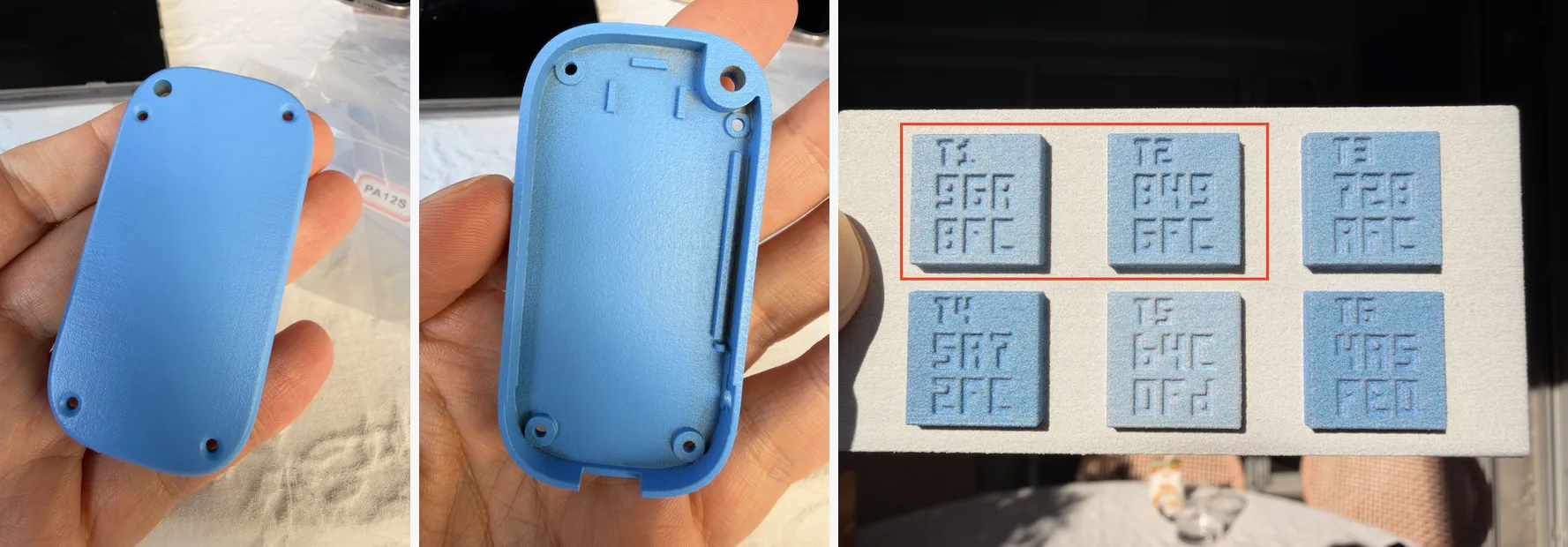
The first case from a print service
Twenty-one printed parts arrive: fronts, trays, buttons and a colour plate, in painted nylon. We used them to pick the colour and the surface texture. In the photos: a tray from the outside, the same tray from the inside, and the colour plate.
-
23OctBox
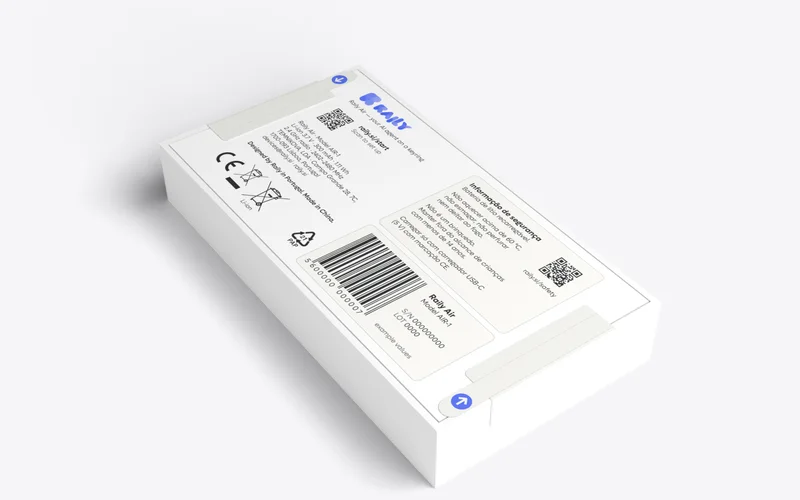
The seal you pull to open the box
The box started with two plain round stickers. On 11 October they became two tear strips, one on each short end, each with a round tab and a blue dot. On 23 October the end of each strip moved inside the lid, so nothing shows on the outside. On 3 November the strips got text: the model on the left, the origin on the right. Since 13 November it reads Designed in Portugal. Assembled in China.
Before 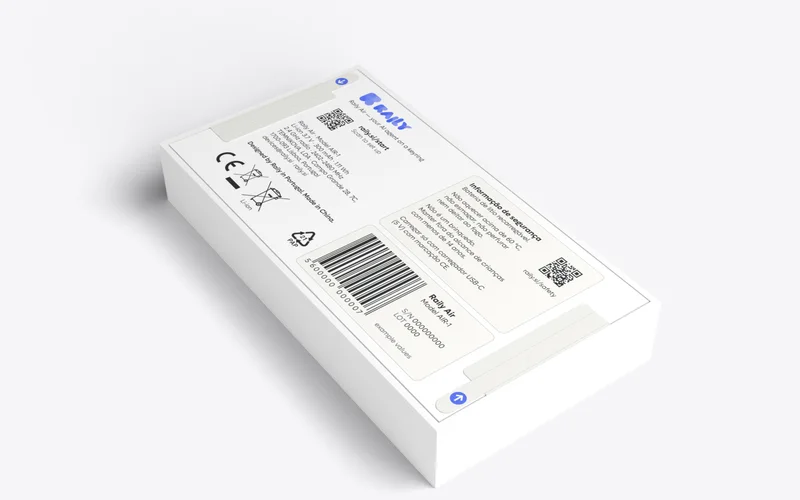
After -
23OctBox
Fourteen box makers asked for quotes
Requests go to fourteen box makers. The brief: a premium rigid box that opens by tearing a seal on the bottom.
-
22OctFirmware
Firmware 0.4.3: the keyring says which model it is
The Bluetooth name of the keyring now shows its model: Raily P1, or Raily Air on the Air build, which is still in development.
-
22OctBoard
The screens pass inspection
Ten 0.96-inch screens, ordered on 13 October, pass inspection on video at our partner's site in China. Coin motors for the prototypes are ordered.
-
20OctApp and films
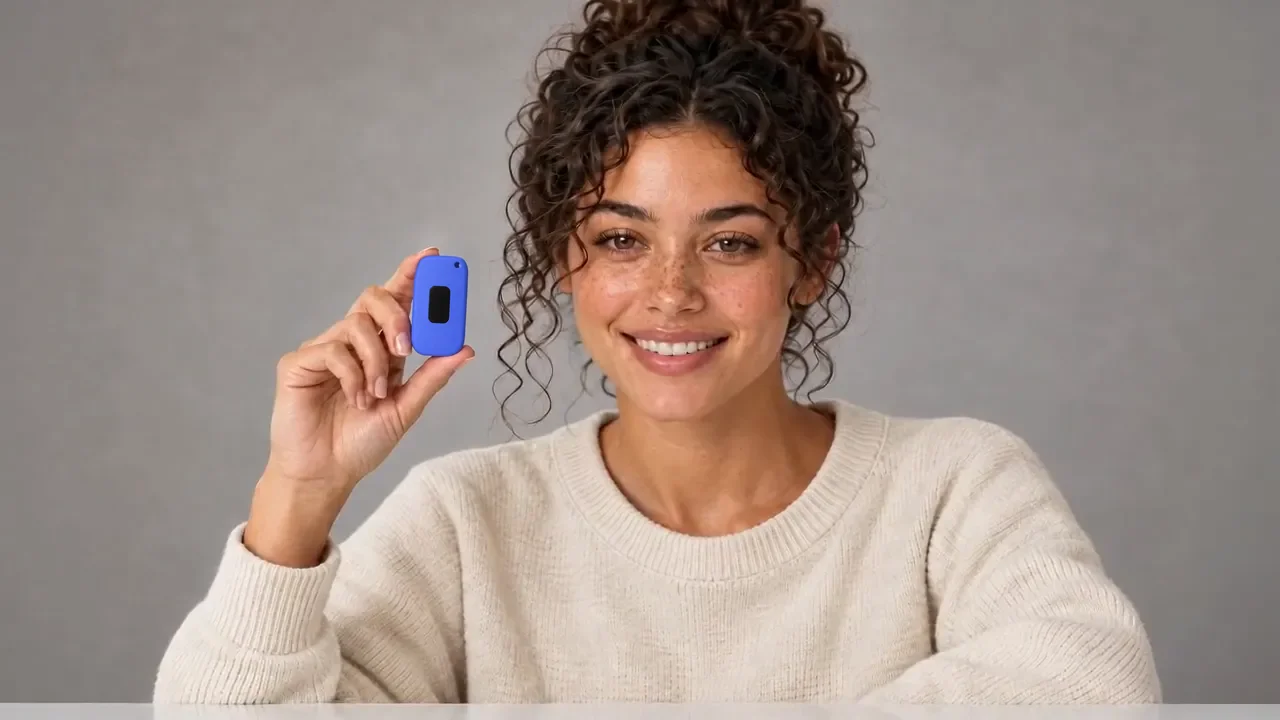
The unboxing film
Twenty-two seconds from the closed box to the first press.
-
20OctBoard
A simple coin motor for the buzz
Air gets a simple coin vibration motor instead of a linear one. Inside the case: a round seat that fits any coin motor, a firm stop for the battery instead of foam, and a ring that locates the NFC tag.
-
19OctApp and films
Short sounds at key moments
The app plays a short sound when someone is found, and there is a switch to turn sounds off.
-
16OctBoard
Battery chosen: 250 mAh, replaceable
The cell is a 3.7 V, 250 mAh lithium-ion one with a plug, so it can be replaced with a small screwdriver. Air weighs about 35 g.
-
13OctFirmware
Firmware 0.4.0: talk to your agent through the keyring
Hold the button for 2 seconds and speak. The keyring sends your voice to the agent through the phone.
-
13OctPapers
Safety sheet in seven languages
The Air safety sheet, the EU declaration and the set-up page are published on the site.
-
13OctCompany
A receiving hub in China
Our battery and assembly partner agrees to act as the receiving hub in China: sample parts are shipped there, checked, assembled and forwarded as one parcel.
-
13OctCase
Aluminium: quotes asked, signal test planned
We asked factories to quote an aluminium case as well as plastic. The antenna sits inside, so from day one the plan was to test the signal before ordering metal.
-
13OctBox
No plastic film, no cable
The box dropped the plastic film for a water-based matte varnish, and the cable left the box. Inside: a square envelope for the cards under the tray and a safety leaflet that folds down to 53 × 53 mm, in the local language and English.
-
13OctApp and films
Hold your phone to the keyring
Hold the phone to the keyring and the NFC tag opens the right page (TestFlight beta).
-
12OctBoard
The screen matches the design
The 0.96-inch OLED panel for Air is confirmed to match the design, and the first quote for assembling our board arrives.
-
8OctFirmware
Firmware 0.3.0, the first public release
The first firmware anyone can flash on the open kit. It brings low and critical battery warnings, shown in the app. The same day the app gets a four-scene tutorial and a hint drawing on the Nearby screen until your first press.
-
8OctBox
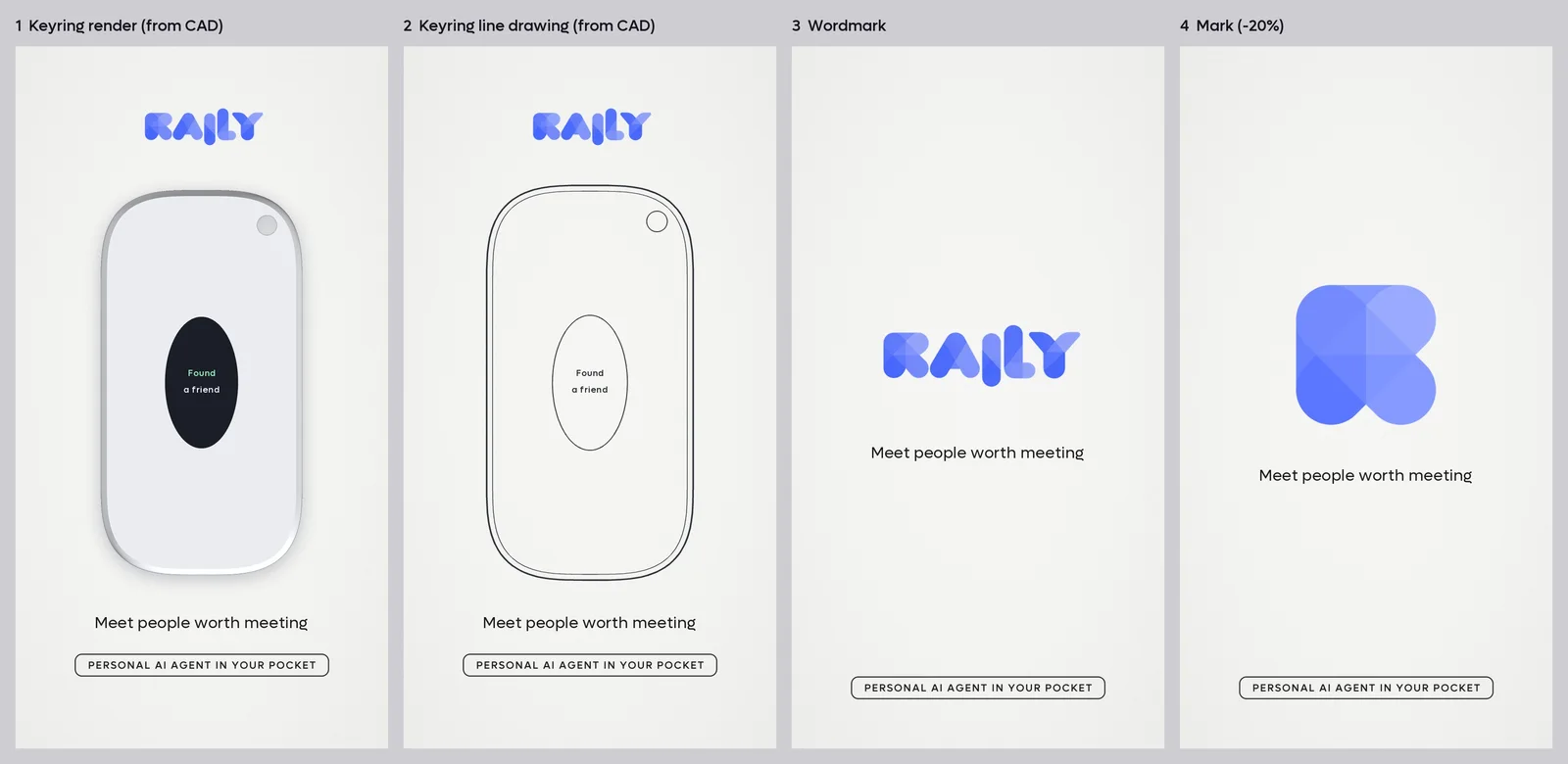
Four ideas for the lid
What goes on the lid: a picture of the keyring, a line drawing of it, the name, or the mark. Several rounds later the line drawing stayed.
Earlier design -
8OctCase
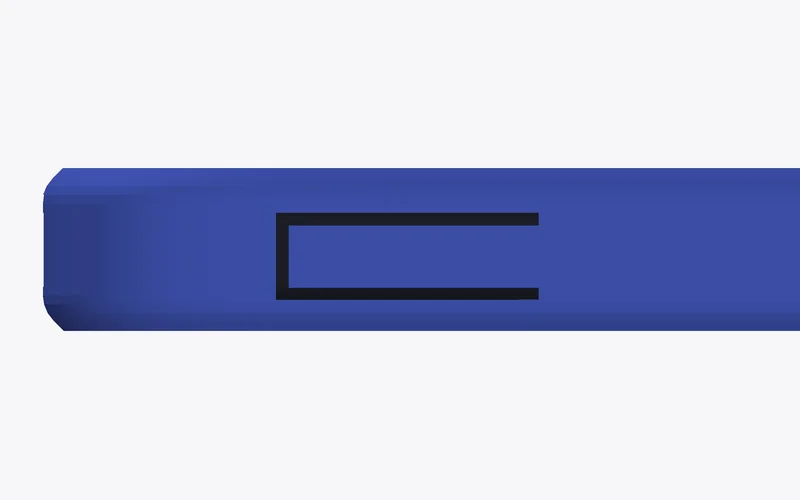
A round button instead of a flexible tongue
The first case was pressed through a long flexible tongue cut into the side wall. It became a separate round button on a stem: firmer under the finger and simpler to mould.
Before 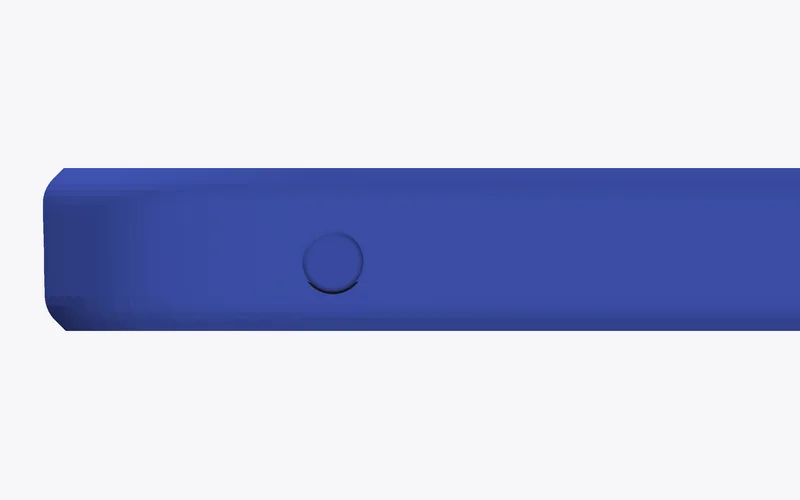
After -
8OctBox
Board, wrap and a matte finish
The real build of the box is fixed: 1.5 mm greyboard, a coated wrap, a white liner, 128 × 64 × 17 mm inside, matte only.
-
7OctBox
The tray, printed and tried by hand
The first printed tray left the keyring 3 mm proud. The second dropped it flush, with finger scoops on both sides, and became the reference shape. Nine more small steps were printed in one day, 7 October.
Earlier design -
6OctBox
The box is built around the real keyring
A first 3D-printed base and lid replaced a size guessed on paper. From day one the box is sized from the real keyring.
-
2OctCase
A version anyone can print
We made a version of the case that anyone can order from a print service, with a separate snap-in button.
-
1OctApp and films
The keyring screen, frame by frame
The site shows the real frames the firmware draws: twenty-four screens, in four languages or as icons only.
-
1OctCase
The size is fixed after three mock-ups
After three printed mock-ups the size is fixed at 40.0 × 76.6 × 9.1 mm, with soft rounded corners. Tried in the hand and approved.
September 2026
-
30SepCase
Air starts from the open kit
The compact Air started from our open keyring kit, 49.6 × 89.5 × 20.3 mm. The target: a case about 40 × 72 × 12 mm with our own board inside.
-
29SepApp and films
A keyring only talks to phones it admitted
Bluetooth bonding and a «Forget all phones» command: the keyring only talks to phones it has admitted.
-
28SepApp and films
The open kit binds with one tap
A kit you built yourself binds to your account with one tap and no box code (TestFlight beta).
-
26SepApp and films
A press in the pocket still gets a place
A press made with the phone in your pocket still gets a location fix in the background (TestFlight beta). The same day the first build reaches testers on TestFlight.
-
25SepApp and films
No update on a low battery
The app blocks a firmware update when the battery is low, so a keyring is not left half-updated. The rescue path is never blocked.
-
22SepApp and films
Speak: the voice agent inside the app
A Speak tab in the app: talk to your agent out loud, the same agent as on the web.
-
18SepFirmware
An interrupted update can be rescued
If a firmware update breaks off halfway, the app finds the keyring again and finishes the job.
-
17SepFirmware
Firmware updates from the phone
The app updates the firmware over Bluetooth, with a progress bar (a testing build). The same day it learns languages, a dark mode and a map of your presses.
-
12SepApp and films
The first prototype of the iPhone app
The iPhone app pairs over Bluetooth with a development board, and a test press reaches the server. Testers get the app from 26 September.
No entries about this yet.
Who builds Air
Six jobs.
Four are placed.
Each part of Air has its own maker. We name a maker once the choice is made and we may say so.
| Part | Where it stands | Maker |
|---|---|---|
| Battery | Chosen 3.7 V, 250 mAh cell | THOR Power |
| Processor module and board parts | Chosen XIAO nRF52840 Sense | Seeed Studio |
| Board assembly | Chosen Contractor selected | Named later |
| Certification | Chosen Lab selected, contract under review | Named later |
| Box | Choosing Ten companies in review: paper, weight, folds | — |
| Case moulding | Choosing Ten factories in review | — |

Raily Air
6 months of Partner, free. Ships early 2027 (estimate), no later than 30 June 2027.